Lots of people believe that the Podesta Group works for Hillary Clinton. In fact, it's the other way around.
The Podesta Group is working assiduously to implement a globalist agenda on behalf of the same corporate oligarchs who are pulling Clinton's strings, and Clinton is simply a tool that the Podestas can use to achieve their objective.
As long as an oligarchy-friendly candidate is installed as president, the Podestas will have done their job. There's no reason to think that Tim Kaine, Joe Biden, Nancy Pelosi, or any other corporate Democrat would be a less effective agent of oligarchy than Clinton. In fact, we have good reason to suppose that all of these candidates (and dozens of other high-profile Democrats) would be more effective than Clinton could hope to be--since she lacks credibility, enthusiasm, and even the mensch-ness that Camille Paglia ascribes to Biden.
Paglia has long maintained that Clinton will be pulled from the race at some point and replaced by a Biden/Warren ticket.
Paglia may not have the personnel exactly right, but she's dead on concerning the strategy in general.
Whether Clinton's collapse at the 9/11 memorial service is as serious as some detractors claim, it certainly lays the foundation for Clinton to exit the campaign on the pretext of health considerations when the moment is right.
But when will the moment be right?
It isn't hard to see that postponing the substitution of Biden (or whomever) for as long as possible makes perfect sense from the perspective of the DNC and the Podesta Group.
Just think about how Clinton's 9/11 controversy has eclipsed other news items for more than a week. Is anyone talking about her failure to stand with the Sioux against DAPL? Is anyone talking about her tepid commentary on police brutality in communities of color? Is anyone talking about how the breakdown of the ceasefire in Syria is merely setting the stage for the war with Russia that Clinton and other Democrats (such as Leon Panetta) crave?
Nope. Instead, all we can hear is people without medical backgrounds arguing with each other about whether Clinton has Parkinson's Disease.
On the surface, her 9/11 collapse looks like just another typical moment of distraction in American politics.
But it's more important for us to recognize her candidacy as a meta-distraction, as will become obvious when Biden is proffered to the American electorate at the eleventh hour to make us think that we've been given a welcome exit from the choice between Trump and Clinton (even though we will all be able to see, after the election, that the choice between Trump and Biden amounted to the same thing).
Clinton's temporary candidacy protects the replacement nominee from any form of accountability. We should think of Clinton as the sacrificial anode of the DNC warship--the highly reactive and polarizing metal whose electrolytic purpose is to be corroded by the saltwater that would otherwise compromise the structural integrity of the hull.
If the Democrats had nominated Biden from the beginning, then he would be the one who looks like he holds environmentalists, peace-niks, and seekers of social justice in contempt.
If Clinton's biggest selling point is that she isn't Trump, then Biden's will be that he is also not Trump--with the added bonus of not being Clinton.
Like many people, I've mistakenly regarded Trump as the foil to Clinton for months now. In fact, both Trump and Clinton will turn out to be foils to Clinton's replacement.
No matter who that replacement is, s/he is unlikely to seem as self-serving, dishonest, and inhumane as Clinton--or as narcissistic, clueless, and petty as Trump.
Please bear this perspective in mind when Julian Assange releases whatever damning information Wikileaks is preparing to unleash against Clinton and the DNC.
No matter how damning that information is, it won't matter come election day because Clinton will have done her job by absorbing all the corrosion associated with the leak.
Furthermore, I predict that no matter how obvious it becomes that Clinton should drop out of the race in light of the Wikileaks revelations (whatever they turn out to be), she won't drop out until after the debates with Trump. The last thing the Democrats need is a gaffe-prone Biden going toe-to-toe with anyone as unpredictable as the Donald.
Anyone who's still wondering how the Democrats could possibly have selected as toxic a candidate as Hillary Clinton should consult the Wikipedia entry on sacrificial (or galvanic) anodes, according to which "the anode must possess a lower (that is, more negative) electrode
potential than that of the cathode (the target structure to be
protected)."
In other words, the more polarizing a substance is, the better it works to protect another substance.from corrosion in a charged environment.
If the ultra-polarizing Clinton really does stay on the ticket through election day, then the DNC critics are right to say that she was the worst possible nominee the Democrats could have selected.
But when she drops out to make room for Biden's pristine, unsullied candidacy, she will turn out to have been the best possible temporary choice.
Showing posts with label DNC. Show all posts
Showing posts with label DNC. Show all posts
Friday, September 23, 2016

Monday, August 15, 2016
Guccifer 2.0 Uses Doxing in a Curious Call for Curation
Guccifer 2.0 leaked a series of documents from the Democratic Congressional Campaign Committee (DCCC) on Friday, August 12, 2016.
Since the hacker's blog entry for the 12th was later censored by WordPress, the hyperlink above allows readers to view the original post via the Internet Archive Wayback Machine.
Of all the posts from Guccifer 2.0, this one is likely to seem the most schizophrenic to readers because it couples a callous exposure of private information (including unlisted phone numbers) with a respectable plea to journalists for help with curation.
In his preamble to the hacked data, Guccifer 2.0 wantonly singles out a particular DCCC worker (Nirali Amin) as the source of various passwords that enabled him to access much of the leaked data.
It's certainly a failure on the institutional level for the DCCC to have kept "the user name and password the same" in so many cases, as Amin indicates in one email--but I'm not sure that many people would blame Amin herself for the oversight. And since Amin's specialization appears to be accounting (rather than cybersecurity), most people will be reluctant to fault her for responding by email to various emailed requests for passwords. (Should she have known better? We all know better on some level, but those of us who work at computer screens all day also know how customary it is to respond to requests for information without wondering who might be spying on our correspondence.)
Beyond singling Amin out for blame, however, the Guccifer 2.0 blog post goes on to provide readers with private phone numbers and unlisted email addresses for many Democrats serving in (or campaigning for) the House of Representatives.
Representative Nancy Pelosi, for example, complained of receiving "obscene and sick" messages on her private number after the blog post appeared. (Incidentally, that's about as close as any Democrats have come to confirming the authenticity of any documents leaked by Guccifer 2.0.)
In an article for Newsweek, Nicholas Loffredo explained why ordinary Americans (and not just those whose information was compromised) might question the integrity of the Guccifer 2.0 project:
And this is precisely what makes the blog post from the 12th so tricky: Clearly Guccifer 2.0 is concerned, on some level, with releasing information in a responsible manner. After sharing lots of personal information and passwords, he ends his blog post with a curious request for assistance from journalists:
In other words, why should a hacker who doesn't mind doxing Democratic Congresspeople suddenly show scruples about exposing their internal documentation willy-nilly?
Depending on what one assumes about the identity of Guccifer 2.0, there are lots of different ways to answer that question. But if we assume for the moment that the hacker is who he says he is (a lone cyber warrior attempting to expose the failure of democracy in the U.S. to the entire world), then his decision is a predictable result of anxiety over document curation.
He seeks to expose all of the publicly sensitive information that warrants exposure, but he doesn't want to expose it without professional guidance. Unfortunately, professionals won't give him guidance until they realize that he should be taken seriously--so releasing the privately sensitive information must seem (from this perspective at least) like an efficient way of demonstrating the validity of the hack.
Concerns about how Julian Assange would curate information leaked to him by Chelsea Manning led to persistent problems in his working relationship with The New York Times and Der Spiegel back when journalistic hacktivism was first establishing itself as an important 21st-century phenomenon.
Edward Snowden's asylum in Russia is indisputably a product of his relationship with Assange and WikiLeaks, but many people forget that Snowden reached out to Laura Poitras and Glenn Greenwald--not Assange--for help in disseminating his information, in part because of his concerns about how his sensitive materials would be curated.
The tension between Greenwald's journalistic approach to curation and Assange's increasingly strident commitment to exposing pristine documents is perhaps best illustrated by this tweet from Snowden:
I don't believe Guccifer 2.0 is who he says he is, but if he is, then it makes sense for him to be somewhat bewildered by the same questions that led to disagreements between luminaries such as Snowden and Assange.
Guccifer 2.0 does not appear to have broken any laws by publishing the contact information in the DCCC leaks. According to Thomas Fox-Brewster of Forbes, the hacker's entry from the 12th was censored by WordPress because it violated the website's "policy on sharing private information"--not because of a specific federal statute that forbids the sharing of such data.
Fox-Brewster also reports that the Guccifer 2.0 Twitter account was temporarily suspended, but it's not clear what justification Twitter used for the suspension. In any case, the account has been restored as of this writing, and the hacker used it to promote a new batch of leaked documents made available today (August 15th):
Complex questions about curation and censorship are too difficult to be resolved in a single blog post, but if we assume that there is only one bad actor in this scenario (the Democratic Party as an institution), then the seemingly schizophrenic behavior of Guccifer 2.0, Twitter, and WordPress is easy to explain as an attempt to process confusion and anxiety about how information should be regulated when the government that was supposed to be in charge of regulating it can no longer be trusted to do its job.
Since the hacker's blog entry for the 12th was later censored by WordPress, the hyperlink above allows readers to view the original post via the Internet Archive Wayback Machine.
Of all the posts from Guccifer 2.0, this one is likely to seem the most schizophrenic to readers because it couples a callous exposure of private information (including unlisted phone numbers) with a respectable plea to journalists for help with curation.
In his preamble to the hacked data, Guccifer 2.0 wantonly singles out a particular DCCC worker (Nirali Amin) as the source of various passwords that enabled him to access much of the leaked data.
It's certainly a failure on the institutional level for the DCCC to have kept "the user name and password the same" in so many cases, as Amin indicates in one email--but I'm not sure that many people would blame Amin herself for the oversight. And since Amin's specialization appears to be accounting (rather than cybersecurity), most people will be reluctant to fault her for responding by email to various emailed requests for passwords. (Should she have known better? We all know better on some level, but those of us who work at computer screens all day also know how customary it is to respond to requests for information without wondering who might be spying on our correspondence.)
Beyond singling Amin out for blame, however, the Guccifer 2.0 blog post goes on to provide readers with private phone numbers and unlisted email addresses for many Democrats serving in (or campaigning for) the House of Representatives.
Representative Nancy Pelosi, for example, complained of receiving "obscene and sick" messages on her private number after the blog post appeared. (Incidentally, that's about as close as any Democrats have come to confirming the authenticity of any documents leaked by Guccifer 2.0.)
In an article for Newsweek, Nicholas Loffredo explained why ordinary Americans (and not just those whose information was compromised) might question the integrity of the Guccifer 2.0 project:
[I]t's difficult to identify what public interest is served by sharing cellphone numbers and contact lists from within the DCCC, as Guccifer 2.0 did, or what truth is being uncovered by the release of a program from a political fundraiser. Despite Guccifer 2.0's gleeful tone, Friday's release is a minor footnote to the hack of the DNC, which showed committee officials arguably conspiring against former Democratic candidate Bernie Sanders and which lead to the resignation of DNC chair Debbie Wasserman Schultz.On the one hand, our political representatives are so difficult for ordinary citizens to contact that there is something to be said for releasing their private contact information. But on the other hand, they are still private citizens (at least part of the time), and those of us who seek to protect the Fourth Amendment should respect their right to privacy as much as anyone else's.
And this is precisely what makes the blog post from the 12th so tricky: Clearly Guccifer 2.0 is concerned, on some level, with releasing information in a responsible manner. After sharing lots of personal information and passwords, he ends his blog post with a curious request for assistance from journalists:
Dear journalists, you may send me a DM if you’re interested in exclusive materials from the DCCC, which I have plenty of.That's a strange move for a completely reckless hacker to make. If bringing information to light is all Guccifer 2.0 cares about, then why does he need to bother with journalistic middlemen? Why didn't he just post all the hacked documents directly to his WordPress site?
In other words, why should a hacker who doesn't mind doxing Democratic Congresspeople suddenly show scruples about exposing their internal documentation willy-nilly?
Depending on what one assumes about the identity of Guccifer 2.0, there are lots of different ways to answer that question. But if we assume for the moment that the hacker is who he says he is (a lone cyber warrior attempting to expose the failure of democracy in the U.S. to the entire world), then his decision is a predictable result of anxiety over document curation.
He seeks to expose all of the publicly sensitive information that warrants exposure, but he doesn't want to expose it without professional guidance. Unfortunately, professionals won't give him guidance until they realize that he should be taken seriously--so releasing the privately sensitive information must seem (from this perspective at least) like an efficient way of demonstrating the validity of the hack.
Concerns about how Julian Assange would curate information leaked to him by Chelsea Manning led to persistent problems in his working relationship with The New York Times and Der Spiegel back when journalistic hacktivism was first establishing itself as an important 21st-century phenomenon.
Edward Snowden's asylum in Russia is indisputably a product of his relationship with Assange and WikiLeaks, but many people forget that Snowden reached out to Laura Poitras and Glenn Greenwald--not Assange--for help in disseminating his information, in part because of his concerns about how his sensitive materials would be curated.
The tension between Greenwald's journalistic approach to curation and Assange's increasingly strident commitment to exposing pristine documents is perhaps best illustrated by this tweet from Snowden:
Democratizing information has never been more vital, and @Wikileaks has helped. But their hostility to even modest curation is a mistake.— Edward Snowden (@Snowden) July 28, 2016
I don't believe Guccifer 2.0 is who he says he is, but if he is, then it makes sense for him to be somewhat bewildered by the same questions that led to disagreements between luminaries such as Snowden and Assange.
Guccifer 2.0 does not appear to have broken any laws by publishing the contact information in the DCCC leaks. According to Thomas Fox-Brewster of Forbes, the hacker's entry from the 12th was censored by WordPress because it violated the website's "policy on sharing private information"--not because of a specific federal statute that forbids the sharing of such data.
Fox-Brewster also reports that the Guccifer 2.0 Twitter account was temporarily suspended, but it's not clear what justification Twitter used for the suspension. In any case, the account has been restored as of this writing, and the hacker used it to promote a new batch of leaked documents made available today (August 15th):
— GUCCIFER 2.0 (@GUCCIFER_2) August 15, 2016Those documents have not been censored by WordPress, and they don't seem to warrant censorship.
Complex questions about curation and censorship are too difficult to be resolved in a single blog post, but if we assume that there is only one bad actor in this scenario (the Democratic Party as an institution), then the seemingly schizophrenic behavior of Guccifer 2.0, Twitter, and WordPress is easy to explain as an attempt to process confusion and anxiety about how information should be regulated when the government that was supposed to be in charge of regulating it can no longer be trusted to do its job.
Saturday, June 25, 2016
A Lullaby for the DNC before It Slumbers Eternally
Trump v.
Clinton: epic fail
that proves
democracy's for sale.
It's bad he slurs Latino kids,
Call him a bigot, a disgrace;
ignore the Syrians she displaced.
The Hillbots
shriek and snarl as one:
"Fear
what he says, not what she's done."
Apocalyptic
claims abound
on their
side, so let's turn that 'round:
If his words might start World War 3,
then her deeds
will—I guarantee.
rouse old
bloodlust with new warsquawks.
But they
can't be as bad as Dick
because
they're women. See the trick?
I've
swallowed pills from Dems before.
So try to
jam Hill down my throat
and watch me
give the Greens my vote.
Prez Trump is
your fault, DNC.
You could
have had support from me.
If Hill's
the nom, then I'm with Stein.
To stop Trump you should fall in line.
#SeeYouInPhilly
Tuesday, June 21, 2016
Why Should We Doubt Anything Asserted by the DNC, Repeated by the Company They Hired (CrowdStrike), and Confirmed by that Company's Industry Partner (Fidelis)?
According to news sources all over the internet, the verdict is in concerning the hack of the Democratic National Committee. A headline from Business Insider UK reads "Yes, Russia Really Did Hack the Democratic National Committee." Similar headlines have poured in from other sources, such as The Washington Post ("Cyber researches confirm Russian government hack of Democratic National Convention"), Computerworld ("Russian hackers were behind DNC breach"), and Neowin ("The Russian government hacked the DNC after all").
Apparently the world can breathe a sigh of relief and rest assured that the matter has been settled once and for all.
These headlines are generated with such certainty primarily because a cybersecurity outfit called Fidelis has independently corroborated the assertions of CrowdStrike, the company hired by the DNC to mitigate the damage done by the breach.
But none of the stories attached to the headlines question how "independent" the analysis of Fidelis really is. Certainly none of them mention that Fidelis joined a 7-member intelligence exchange program sponsored by CrowdStrike in August of 2014. Nor do they point out that a press release from General Dynamics that same month characterized Fidelis and CrowdStrike as "partners" rather than competitors in the cybersecurity industry.
The Washington Post attempts to bolster its case by referring to a statement from Marshall Heilman, a researcher from Mandiant (long considered a genuine rival of CrowdStrike), according to which "the malware and associated servers are consistent with those previously used by 'APT 28 and APT 29,' which are Mandiant’s names for Fancy Bear and Cozy Bear, respectively."
The Post article doesn't explain how Heilman obtained his malware samples, but gives us a hint in its invocation of yet a fourth cybersecurity firm, ThreatConnect, which "followed up on CrowdStrike’s analysis by looking at computer Internet protocol addresses that CrowdStrike said it had found while investigating the DNC intrusion." (Neither Mandiant nor its parent company, Fireeye, responded to my queries about how Heilman obtained the DNC malware samples.)
So for those keeping score, we know that Russians hacked the DNC because 1) The DNC told us so; 2) CrowdStrike (the cybersecurity firm hired by the DNC) told us so; 3) Fidelis (one of CrowdStrike's industry partners) told us so; 4) Mandiant (based on an examination of malware samples presumably provided to them by CrowdStrike) told us so; and 5) ThreatConnect (based on an examination of IP addresses admittedly provided to them by CrowdStrike) told us so.
Apparently the world can breathe a sigh of relief and rest assured that the matter has been settled once and for all.
These headlines are generated with such certainty primarily because a cybersecurity outfit called Fidelis has independently corroborated the assertions of CrowdStrike, the company hired by the DNC to mitigate the damage done by the breach.
But none of the stories attached to the headlines question how "independent" the analysis of Fidelis really is. Certainly none of them mention that Fidelis joined a 7-member intelligence exchange program sponsored by CrowdStrike in August of 2014. Nor do they point out that a press release from General Dynamics that same month characterized Fidelis and CrowdStrike as "partners" rather than competitors in the cybersecurity industry.
The Washington Post attempts to bolster its case by referring to a statement from Marshall Heilman, a researcher from Mandiant (long considered a genuine rival of CrowdStrike), according to which "the malware and associated servers are consistent with those previously used by 'APT 28 and APT 29,' which are Mandiant’s names for Fancy Bear and Cozy Bear, respectively."
The Post article doesn't explain how Heilman obtained his malware samples, but gives us a hint in its invocation of yet a fourth cybersecurity firm, ThreatConnect, which "followed up on CrowdStrike’s analysis by looking at computer Internet protocol addresses that CrowdStrike said it had found while investigating the DNC intrusion." (Neither Mandiant nor its parent company, Fireeye, responded to my queries about how Heilman obtained the DNC malware samples.)
So for those keeping score, we know that Russians hacked the DNC because 1) The DNC told us so; 2) CrowdStrike (the cybersecurity firm hired by the DNC) told us so; 3) Fidelis (one of CrowdStrike's industry partners) told us so; 4) Mandiant (based on an examination of malware samples presumably provided to them by CrowdStrike) told us so; and 5) ThreatConnect (based on an examination of IP addresses admittedly provided to them by CrowdStrike) told us so.
Thursday, April 14, 2016
If Hillary Secures the Nomination, the Next Casualty of Regime Change Will Be the Democratic Party
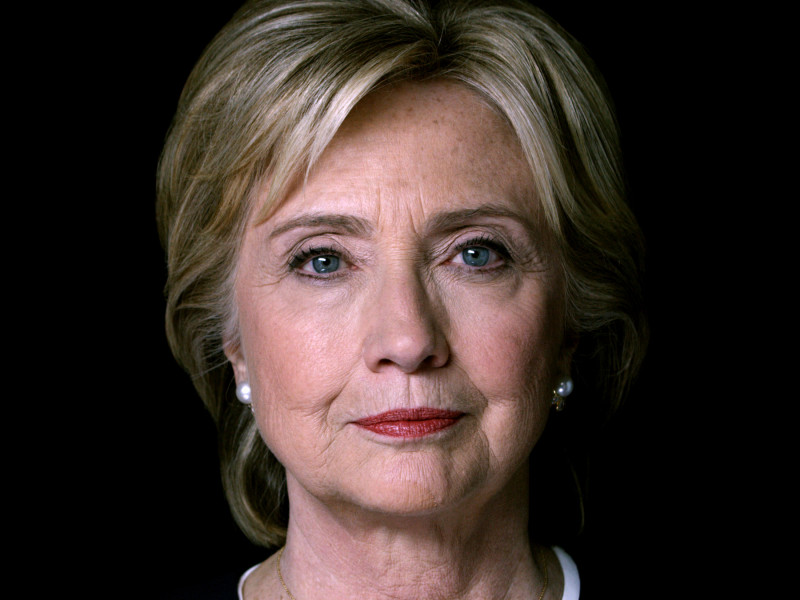
Hillary Clinton has a talent and a propensity for toppling
established systems of authority and leaving power vacuums in their place. This
usually happens in places far-flung from the average American voter (such as Honduras,
Libya, etc.), but the chickens of Clinton’s chickenhawkishness are about to
come home to roost for the Democratic Party.
The Democrats can only send one message to the American
people by nominating Hillary Clinton: that they would rather preserve the
current system of pay-to-play politics than win the presidency.
We all know that’s true, of course. But we also expect our
professional politicians to do a better job of concealing their cupidity and
corruption. This reasonable expectation of the electorate puts Hillary in a
bind, since it’s difficult for one to conceal what one embodies.
Every speech Clinton makes and every press stunt in which
she participates is a dazzling display of disconnectedness from voters whose
concerns she cannot fathom. From her perspective, however, it’s only fair to
hold ordinary American citizens in contempt. If we commoners wanted to avoid
economic hardships in our own lives, then we should have been more eager than Clinton
was to trample on people weaker than ourselves. Those of us who didn’t seize
the opportunity to profit from the school-to-prison pipeline or to advocate
fracking in struggling economies all over the globe or to exploit worldwide
sympathy for Haitians to line the pockets of our friends and family members—well,
we only have ourselves to blame.
If Hillary could really win a general election in November,
then the Democratic party might be able to survive her nomination. But she can’t
win an election because there are only two kinds of people who will vote for
her: the misleaders and the misled.
The misleadership class that supports Clinton consists of the
people who are already on her payroll and others who seek to be on her payroll.
Their motives are clear; their incentives are real; and their support of Clinton
is perversely genuine inasmuch as they are championing the candidate who is
most like themselves. Some of them work in politics; some work in churches;
some work in the media; but they are united in their purpose of putting
themselves as far ahead as possible by making sure the people whom they
influence stay as far behind as possible. These folks will vote for Clinton,
but there aren’t as many of them as Clinton likes to pretend.
The class of the misled includes rank-and-file citizens who
trust their local politicians, their local clergy, and the corporate media to
tell them what is in their best interest. Such people are often overworked and
underpaid. They are too busy and exhausted to pay close attention to national
politics, and they may only have access to information via frequencies approved in advance by the Clinton machine. These
folks will also vote for Clinton, but the existence of the internet means that
the ranks of the misled are dwindling by the hour.
The misleaders and the misled who support Clinton do not
even constitute half of the Democratic Party—much less half of the general
electorate. Clinton therefore has no realistic chance of winning. She has
relied on the foil of Donald Trump to prop up the sputtering viability of her
own candidacy, but as we watch the wheels falling off the Trump campaign, we
must realize that Clinton is going to have to beat another actual politician with an
actual ground game. She can’t do it.
But as I indicated earlier, the elite members of the Democratic Party are determined to
nominate her not because they believe she will win in November, but because
they know that her Republican opponent (whoever that turns out to be) will pose
less of a threat to their gravy train than Bernie Sanders does.
I understand why the DNC leaders believe this strategy will
work. They’ve seen how successful Clinton has been at destabilizing and
disenfranchising people throughout the world by removing their leaders from
power. Why should it surprise anyone that she’s willing to destabilize and
disenfranchise the Democratic base by running as an unelectable candidate—a candidate
who cynically relies on her own toxicity to prevent the people she purportedly
represents from having a voice in government?
But there’s a critical difference between cutting power off at
the head and cutting it off at the base. If you remove the democratically
elected leader of Honduras from power, Honduras doesn’t cease to exist. But if
you remove the voting base from the Democratic party, all you have left is a
train starving for gravy.
So good luck, Paul Krugman. Good luck, Barney Frank. Good luck, Debbie Wasserman
Schultz. Good luck, Queen Hillary. Good luck with your glorious future of
presiding over nothing and no one.
Subscribe to:
Posts (Atom)