Monday, August 1, 2016

Politifact Uses Sneaky Language (and Sneakier Punctuation) to Present Speculation as Fact in DNC Breach

Yesterday, Politifact's Lauren Carroll released an article entitled "What we know about Russia's role in the DNC email leak." The purpose of the article is to make speculation seem more factual than it is.

Carroll is an artful writer who knows how to create the illusion of objectivity by placing almost all (but not quite all) of her quoted material within quotation marks. She also understands how balanced it makes her article seem for her to begin and end with arguments (one from Julian Assange and the other from Jeffrey Carr) that challenge its preconceived conclusion.

Carroll certainly seems meticulous in the presentation of her evidence with paragraphs such as this one:
"The consensus that Russia hacked the DNC is at this point, very strong, albeit not unanimous," said cybersecurity consultant Matt Tait, who has been critical of Clinton's email practices. "The consensus that Russia hacked the DNC in support of Trump is, by contrast, plausible, but something for which the jury at this stage is very much still out."
Did you notice all the signifiers of non-partisan objectivity? First, Tait is no shameless Clinton surrogate, since he dares to be critical of her patently careless email practices. Second, he admits that the consensus about Russia's guilt isn't unanimous. And third, he is positively eager to concede the point that even if Russia is responsible for the DNC breach, that doesn't mean the purpose of the hack was to support Trump in the election (which suggests that asking "Have you stopped beating your wife?" is more reasonable than asking "Have you stopped beating your wife for her bad singing voice?" because the former question doesn't foreclose possible answers with as much specificity as the latter).

Caroll is equally artful in her construction of this paragraph:
The U.S. government is not ready to publicly name the suspected perpetrators behind the DNC hack, but the New York Times has reported that intelligence agencies have "high confidence" regarding the Russian government's involvement.
See what she did there? She's a responsible journalist who recognizes and maintains distinctions between the accusations of private cybersecurity companies (such as CrowdStrike) and the findings of official government intelligence agencies. But she also wants her readers to know that even though she can't say the U.S. government blames Russia for the attack, the New York Times says it (which is analogous to the argument that Clinton campaign chairman Robby Mook used to support his redbaiting analysis of the breach on CNN on July 24th: "This isn't my assertion; there are a number of experts that are asserting this").

However, Carroll is at her most artful not when she couches quotations in slanted ways, but when she eschews quotation marks entirely so as to blur her own voice (the voice of a presumably disinterested journalist) with the voice of her interviewees (some of whom are shameless partisan shills):
Translation: The agencies have likely corroborated the technical evidence with other intelligence, like human or financial sources, said Susan Hennessey, a Brookings Institution fellow and a former lawyer for the National Security Agency.
As of yet, there’s no evidence anyone other than Russia breached the DNC. So unless someone hacked the Russian agencies, the Russian government is likely WikiLeaks’ source, Hennessey said. Additionally, Assange and the Russian government have a well-documented relationship, for example the fact that Assange has hosted a television show on RT, a state-owned network. [Emphasis added.]
Just look at the first sentence of that second paragraph (the one in bold type), and ask yourself what effect it's likely to have on most readers skimming through the article. It completely dispenses with the question of whether Russia is behind the DNC breach by wondering only whether any other entities might also have participated. And the absence of quotation marks doesn't even warn readers that the incredibly lazy logic of such an argument belongs to Susan Hennessey rather than Lauren Carroll--not until they reach the end of the next sentence (which some skimmers never do).

The most positive thing I can say about Carroll's article is that it at least mentions Jeffrey Carr, whose "Can Facts Slow The DNC Breach Runaway Train?" is the single most cogent analysis of the DNC breach written from the perspective of someone with the relevant technological expertise.

I can't say the Politifact article is bad because it's actually a brilliant example of propaganda. Carroll has chops as a writer; she knows better than to try to jam an argument down her readers' throats without first coating it in FD&C Yellow #34 (a synthetic coloring and flavorizer designed by muckrakers to make arguments taste more objective than they are). So read the Politifact article if you want to know what the corporate media wants you to think about the DNC breach.

But read Carr's article if you want reasoned, relevant analysis.


Thursday, July 21, 2016

The Whole Story: Guccifer 2.0


This blog will be on hiatus until 7/28, as the operator will be joining protesters in Philadelphia for the upcoming week.

While I'm in Philly, I hope to edit a comprehensive video on Guccifer 2.0 that I prepared for YouTube earlier today:


Wednesday, July 20, 2016

Gamers Repeat "All Your Base Are Belong to Us" with a Chuckle, but Journalists Repeat "We've Deployed the Recommended" with a Straight Face

On July 18th, Joe Uchill of The Hill turned a quotation from the DNC into gibberish by ending a sentence prematurely. Check out his final paragraph, which I have pasted below exactly as it appears in his article:
“Our experts are confident in their assessment that the Russian government hackers were the actors responsible for the breach detected in April,” that statement read, “and we believe that the subsequent release and the claims around it may be a part of a disinformation campaign by the Russians. We’ve deployed the recommended.”
Again, that final period is Uchill's editorial insertion, not mine. The full sentence that he abridged into meaninglessness is a chestnut that first appeared in various media outlets (such as CNN) in mid-June: "We've deployed the recommended technology so that today our systems are secure thanks to a swift response to that attack and we will continue to monitor our systems closely."

So you're probably thinking: "What's the big deal? Uchill obviously made a mistake. It's a cut-and-paste error. Those happen all the time."

You're right. It isn't a big deal that Uchill made an error, but it is worth noting that other press outlets have simply repeated that error without commenting on it (or even noticing it).

Here's a passage from Michael Sainato's latest piece on Guccifer 2.0 for The Observer:
Instead of confirming or denying the validity of the documents, the DNC has reverberated the same tired excuse, claiming Russian hackers are responsible: “Our experts are confident in their assessment that the Russian government hackers were the actors responsible for the breach detected in April and we believe that the subsequent release and the claims around it may be a part of a disinformation campaign by the Russians. We’ve deployed the recommended.”

While the DNC and Clinton campaign have called for party unityClinton has continued the politically-expedient tactic of adopting several of Sanders’ popular ideas.
I don't have a problem with Sainato quoting Uchill, but I find it strange that he didn't bother to read the material he quoted--since anyone who reads "We've deployed the recommended" is bound to wonder what happened to the rest of the sentence.

Sainato isn't alone. Uchill's meaningless formulation was also repeated (without comment) by The Nagaland Post and Investment Watch.

This isn't just a case of Uchill making a mistake; it's a case of multiple journalistic outfits failing to recognize that mistake for what it is--probably because they all know better than to read anything inside a quotation attributed to the DNC.

Our journalists believe that their job is simply to repeat whatever our political parties tell them, not to evaluate quotations for accuracy or even intelligibility. Worse yet, since they know that whatever appears inside quotation marks from a political source is almost certainly a lie, they protect themselves from that dishonesty by NOT reading the material in question even as they are in the process of PRESENTING it to their audience.

This is the state of the fourth estate in America is 2016.

Tuesday, July 19, 2016

Hillary Clinton's Policies Are LESS Dangerous Than the Rhetoric That Belies Them


If you support Hillary Clinton because she is at least willing to acknowledge the reality of climate change (as opposed to Donald Trump, who continues to deny the phenomenon), then you apparently believe it's okay to overcook the planet as long as we have the paperwork to show that we smelled it burning a long time ago.

If you support Clinton because she hides her warmongering behind convoluted diplomatic relationships (as opposed to Trump, who talks cavalierly about murdering innocent civilians simply because they're related to suspected terrorists), then you apparently believe that World War 3 won't affect you as long as the corporate media agrees not to cover it.

If you can make peace with Clinton's dogwhistling brand of white supremacy (which is commendably circumspect compared to Trump's overtly racist rhetoric), it's probably because you think that disproportionately imprisoning people of color for nonviolent crimes only becomes a problem for Americans when our leaders use language ill-advised enough to make us confront it.

Over and over again, people insist that Clinton is somehow a "lesser evil" than Trump because even though she will make the same mistakes, she will at least dress those mistakes in palatable language for the population. Whereas Trump would argue, "Let's get rid of freedom of the press because I don't like what reporters are writing!", Clinton knows to say, "Because we can't afford to have journalists tipping the hand of investigators to our ISIL opponents, I'm afraid the authorities will be unable to comment further on [insert tragedy/scandal here] at this time, and we're asking our friends in the press for a temporary suspension of all coverage relating to the subject."

Clinton is a lesser evil than Trump in the same way that a coral snake is less deadly than a garden hose. Sure, the hose can kill people if someone turns it into a noose--but such a noose would be crude and inefficient and prone to breaking. The coral snake, on the other hand, knows how to kill silently and repeatedly without calling attention to itself.

Trump isn't just wrong about everything. He's obnoxiously wrong--wrong in a way that will catalyze American citizens and the rest of the world to oppose him.

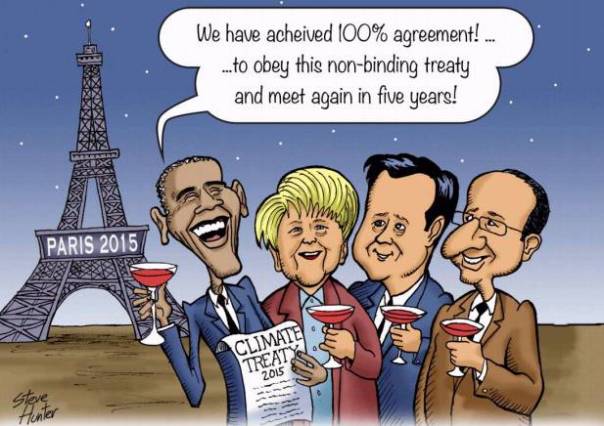
Clinton is wrong in a different way: the politically expedient way of Obama. She is wrong about Wall Street the same way that Obama was wrong not to jail the CEOs of the big banks (or even to break up their institutions). She is wrong about race in the same way that Obama has been wrong to defend the trappings of the carceral state (the school-to-prison pipeline, the war on drugs, and a two-tiered system of justice). She is wrong about the environment in the same way that Obama has been wrong to use non-binding agreements (such as the Paris climate deal) as sops to people who want their grandchildren to have fresh air and clean water.

Trump's brand of wrong will essentially provoke change, whereas Clinton's brand of wrong is carefully designed to perpetuate the status quo.

And yet thoughtful people continue to assert that Clinton is somehow less dangerous than Trump.

I'm talking about people like Benjamin Dixon, who fell headlong into the Clinton bungee pit on last night's installment of The Benjamin Dixon Show:


Twenty-three minutes into the video, Dixon says, "If you are a black person supporting Trump, you may not be a white supremacist, but you're sure as shit standing next to white supremacists this week at the Republican National Convention . . so I need people to explain [their] thinking and [their] rationale and give me [their] priorities."

One rationale is this: If we really want to address the institutional racism that compromises our justice system (from the beat cop to the local district attorney all the way to Attorney General Loretta Lynch and President Barack Obama), then we have to confront the inequities of that system. The fact that Lynch and Obama are both black only muddies the waters around the inherently racist nature of the oppressive system they support. If Trump is elected president, then when he attempts to appoint an avowed white supremacist as attorney general, the public will be galvanized into opposition (instead of blithely accepting the enforcement of white supremacist policies by Obama and Lynch simply because they happen not to be white themselves).

Dixon goes on to say: "Donald Trump may not be a Grand Master of the Ku Klux Klan, but he has the support of all the Grand Masters of the Ku Klux Klan." He knows perfectly well that Hillary Clinton also has their support, but he seems to take comfort in the fact that she knows better than to brag about it. Does that really make her less dangerous than Trump? Really?

"I want to know how a gay person can vote for Trump," Dixon demands at the twenty-four minute mark. But why doesn't he want to know how any LGBTQ person of voting age can justify supporting Clinton after witnessing her absurd mental gymnastics on the question of gay marriage? 

"I want to know how a poor person can vote for Trump," he says just 20 seconds later--and goes on to argue that in a single-factor analysis based on poverty, a voter would almost certainly choose Clinton over Trump.

Why? If two people are equally committed to robbing me blind, but I know that one will later deny having robbed me and the other will brag to the police about what he did--then I would definitely prefer to be robbed by the braggart. At the very least, his bluster will make it easier for me to convince the people around me that I was robbed. And at most, it might embolden those people to stand up for me.

Dixon is plainly conscious of identity politics. He is astute in his critique of the left's inability to talk about intersectionality as effectively as neoliberals do, but that doesn't seem to keep him from assuming that someone who overtly champions the oppression of the marginalized (Trump) is less likely to lead to an overhaul of the system than someone who covertly champions their oppression (Clinton).

Despite apocryphal reports to the contrary, Abraham Lincoln probably didn't credit Uncle Tom's Cabin (by Harriet Beecher Stowe) with starting the U.S. Civil War. But he may as well have done so in light of the novel's tremendous popularity (which made it second only to the Bible in U.S. sales in the 19th century). Even though Stowe's novel didn't start the Civil War all by itself, it helped solidify public opinion against slavery in the 1850s by presenting millions of readers with a despicable slave owner named Simon Legree. If a fictitious Legree could have such an effect in the age of the printing press, just imagine what a flesh-and-blood Trump will do for progressive values in the era of social media.

With an option like Jill Stein available to us, I believe that only a lunatic could vote for either Trump or Clinton. But if you are a) committed to change and b) convinced that you have to choose between either Clinton or Trump, then I don't see how anyone (from ethnic minorities to the LGBTQ community to environmental activists and peaceniks) can doubt that Trump is the far saner choice.


Monday, July 18, 2016

The DNC Has "Deployed the Recommended" to Deal with Guccifer 2.0--Whatever That Means

Joe Uchill of The Hill has written three articles about Guccifer 2.0 since July 13th. All three conclude in much the same way (by reminding readers that unidentified sources consider Guccifer 2.0 to be part of a Russian disinformation campaign).

Here's the final paragraph of "Guccifer 2.0 releases new docs" (7/13):
“Our experts are confident in their assessment that the Russian government hackers were the actors responsible for the breach detected in April, and we believe that the subsequent release and the claims around it may be a part of a disinformation campaign by the Russians,” a senior DNC official said in a written statement.
Here's the antepenultimate paragraph of "Celeb phone numbers included in Guccifer 2.0 hack" (7/18):
Many have suggested that Guccifer 2.0 is a front for Vladimir Putin in the Russian leader’s efforts to influence American politics, something Guccifer 2.0 denies.
And here are the final two paragraphs of "New Guccifer 2.0 dump highlights 'wobbly Dems' on Iran deal" (7/18):
The DNC declined to issue a new comment but reiterated a prior statement from a senior official.

“Our experts are confident in their assessment that the Russian government hackers were the actors responsible for the breach detected in April,” that statement read, “and we believe that the subsequent release and the claims around it may be a part of a disinformation campaign by the Russians. We’ve deployed the recommended.”
Note that the last conclusion is almost identical to the first. However, Uchill knows better than to conclude two out of three articles on the same subject in less than a week in exactly the same way. So he presents the illusion of changing things up by moving the attribution of his unnamed source to the middle of the paragraph and tacking on a puzzling piece of extra information: "We've deployed the recommended."

The recommended what? It seems as though the article ends on a challenge to the reader to fill in the blank--something that's very easy to do if we remember one of Guccifer 2.0's earlier leaks concerning "Reporter Outreach" strategies from the DNC: "pitch stories with no fingerprints and utilize reporters to drive a message."

I therefore suspect that if Uchill had included the final sentence of his latest conclusion in full, it would have read something like this: "We've deployed the recommended strategy of ensuring that reporters muddy the waters around Guccifer 2.0 by concluding every single article they write about the hacker with speculation about his being part of a Russian disinformation campaign."


Friday, July 15, 2016

Truly I Tell You, No Black Intellectual Is Heeded in His Home Country

Readers of the UK's Guardian heard from Cornel West yesterday about Barack Obama's failure to stem the tide of police brutality in America--brutality that is overwhelmingly and routinely directed at citizens of color.

West is permitted to tell the citizens of other countries about Obama's spineless complicity with the institutional racism of our police state, but the mainstream media in America feels no obligation to quote West when he correctly observes that "Whatever solidarity [Obama] does offer is just lip-service to suffering, but he never makes it a priority to end that suffering."

West concludes his article by expressing his support for Jill Stein and the Green Party--a position which is not only reasonable, but necessary in light of the Democratic Party's sustained betrayal of people of color through its support of a deeply discriminatory war on drugs, its decades-long promotion of prisons-for-profit, and its insidious neoliberal dedication to the project of talking endlessly about the intersectionality of race and class in America without lifting a finger to address that problem.

West's argument about supporting Stein was so powerful precisely because he grounded it in the context of the killings we saw in Louisiana, Minnesota, and Texas just last week. The teaser that UK readers saw concerning West's article was completely accurate as a summary of his argument: "Obama has failed victims of racism and police brutality."

But how have our media outlets in the US presented West's argument? In almost every case, West's nuanced and powerful condemnation of Obama's inaction has been reduced to his endorsement of Stein.

CNN says: "Cornel West endorses Green Party candidate Jill Stein." 

The Hill says: "Sanders ally Cornel West backs Green candidate."

Bloomberg says: "Cornel West Backs Green Party's Stein for U.S. President."

In fact, as of 2:30 p.m. EST the day after The Guardian published West's piece, here's a screenshot of all seven entries that come up via a Google news search for the terms "Guardian" + "Cornel West":


As you can see, not one article makes the slightest attempt to connect West's endorsement of Stein to the recent events that highlight the very real phenomenon of cop-on-black crime in America.

This glaring omission exposes our neoliberal media establishment for what it is. Instead of telling us why West endorses Stein, our news outlets focus entirely on the fact that he endorsed her, which is simply another implicit way of pushing the argument that Democrats are somehow on the side of people of color in this country simply because they are less hateful in their speech (and less prone to race-baiting demagoguery) than their Republican counterparts.

Meaningful debate on the intersectionality of race and class in America is long overdue, but that debate will never happen if the most important speakers can only be heard across the pond, which is the path to which we have apparently committed ourselves whether we elect Trump (whom West calls a "neo-fascist catastrophe") or Clinton (whom he identifies as a "neo-liberal disaster").


Thursday, July 14, 2016

Interview with a Berniecrat: Dr. Jeremy Teuton

This blog post is designed to introduce readers to Dr. Jeremy Teuton, a self-proclaimed Berniecrat who is currently campaigning for a U.S. Senate seat from the state of Washington.

Question 1: Since you identify yourself as a Berniecrat, can you define what that means for readers? More specifically, which high-profile candidates associated with the Sanders insurgency (e.g. Zephyr Teachout and Tim Canova) do you consider most similar to you? 

Teuton: I didn’t start out as a Berniecrat. For years, I’ve held onto my policy positions and my belief that government can be fixed. I grew wary of waiting for a candidate I could support--one who I believed meant what s/he said and would work for the good of the nation’s people instead of donors or the politically expedient interests of a party. After watching many candidates talk out of both sides of their mouths (by calling for campaign finance reform while taking all the money they can and either not resisting SuperPacs or actively working to loosen regulations on money in politics), my wife and I finally decided that this was the election cycle when people were fed up enough to act. I credit Senator Sanders with waking the public up and focusing people's attention on the issues that drive candidates like Zephyr Teachout. Although I’m against political parties, I understand the calculation that drove Bernie to identify as a Democrat for his campaign, and I believe there are good people in the parties. However, I do not believe Debbie Wasserman-Schultz is one of them, and I wish Tim Canova all the best in removing her. I’m happy to call myself a Berniecrat to put a label on the values I proudly share with Senator (hopefully soon-to-be President) Sanders. 

Question 2: Who are the most important competitors for the senate seat you are seeking, and what makes you think you can defeat them? 

Teuton: While the incumbent Patty Murray is the obvious opponent, in Washington there are 17 people listed on the ballot. I have spent my efforts drawing a contrast between myself and the front-runner Republican candidate Chris Vance and the incumbent Democrat (while calling attention to the similarities between those two). I find it interesting that many of the other candidates were motivated to run and indeed champion some of the same issues that I do. I'm not impressed enough with any of them to believe they would do a better job, and to my knowledge none have spelled out as many positions and solutions as I have. I'm running to be a representative for all of Washington, to eliminate campaign finance corruption, and to break the stranglehold of the two national parties. I believe if I can win in Washington without taking the corrupt money, without the backing of the parties, and without forsaking my rational positions, it will help inspire other decent citizens to run. With just ten rational independents in the Senate, neither Rs nor Ds can have a majority that can bully through or block legislation, so only reasonable legislation will be passed.

Question 3: Your website includes a lot of information about your personal and professional history, but which of your experiences or qualities do you expect to be most helpful to you in the battle to fight political corruption?

Teuton: Our government was first and foremost supposed to be run by the people, by citizens. I do not think the current "farm league" method of having politicians work their way up the ladder to federal office serves the people. I'm a professional problem solver. I am a fighter; I chew on problems until I find a way to solve them. My tax code is one example. I also very much believe in practicing what one preaches, as I have solar panels on my home and commute in a plug-in hybrid. As I have lived all over Washington state from the rural east to the metropolitan west, I believe I have a broader experience with the people of Washington than the other candidates. While no one I know likes to be proven wrong, I very much value being challenged and corrected, so I go out of my way to critique my own assumptions. I find that my ability to enter new fields and rapidly acquire proficiency in them is partially due to my need to understand and my willingness to be wrong and ask the "stupid" question to be sure I understand.   

Question 4: You have released a videotaped announcement of your candidacy in which you let viewers know that you don't want money from anyone who can't vote for you. The video explains your belief that elected officials should be accountable to their constituents instead of beholden to their donors, but it's less clear about your tax proposal. Some viewers might come away with the impression that you advocate a flat tax (i.e. an identical income tax for all American citizens regardless of income) instead of, say, a graduated income tax. Can you explain what sort of tax program you do advocate and why it's a mistake for potential supporters of yours to confuse that program with a flat tax? 

Teuton: I regret that I failed to be clear in explaining my tax code proposal in the limited time available in the video. The code I propose would include many more brackets than we currently have with a slight increase in tax rate for each successive bracket. The increases get smaller and smaller until it effectively stops growing. In my proposal, all income taxes (including payroll and capital gains) are replaced with this single code, so any citizen's income is treated the same regardless of how that income was earned. If two people each make $60K/year (one through the stock market and the other through manual labor), they would pay the EXACT SAME TAX. If the world's richest American made an extra $10K from a particular investment, it would be taxed at whatever rate the highest bracket is. If the poorest American's only income was somehow $10K from that VERY SAME investment, it would be taxed in her/his current income bracket (likely the very lowest). For more details, please see: http://www.drjeremyteuton.com/#!ins-and-outs-tax-code/jcyhz

Question 5: Jill Stein and the Green Party have long contended that it's "very difficult to have a revolutionary campaign within a counterrevolutionary party." Do you think it's fair to characterize the Democratic Party as "counterrevolutionary"? And is it more realistic for Berniecrats to think they can build a bridge to a brighter political future via the Democratic Party or for Hillary Clinton to build a bridge to a greener economy via the fracked natural gas that she touts as clean?

Teuton: I believe that when parties began as "bottom up" collections of like-minded people pushing a candidate they believed in, they were a good thing for the country. However, I am convinced that the two entrenched national parties are so rigidly hierarchical that they are a detriment to our government, holding too much sway over not only their members but the very mechanics of government. Although I believe it is possible to transition to a green economy while we use natural gas, the tendency to forever postpone true solutions is just like what we see with the parties themselves. It's the transition from the current model to the new one that I think is being blocked in both cases. Reform of the party seems to always be "in the works" or "on the way," and we just have to put up with the mess "for now." I think the effort to greenwash natural gas (especially fracked natural gas) is like carbon capture from "clean coal": a stall tactic instead of a genuine effort to make the necessary transition, which should be seen as a giant economic opportunity (not a burden).

Question 6: Most Sanders supporters agree that getting big money out of politics is the key to solving a litany of other problems that stem from racial, economic, social, and environmental injustice. But isn't it possible that one or more of those problems will actually spiral catastrophically out of control before we can solve the money problem? Can you make a case for addressing any specific problem (from demilitarizing police forces to preserving net neutrality to reducing carbon emissions) before we have eliminated big money from politics? 

Teuton: I do not believe you have to wait for any one solution to work on the others because there are good people in both parties. Although I believe in fighting for the country on all fronts, I also believe that some structural things (such as gerrymandering and voter suppression) will not be addressed by the parties and candidates that benefit from them. Ballot access laws in Washington, for example, were written to protect the two-party system and the incumbents from challengers.  If I do not finish the primary as one of the top two candidates, the law prohibits me from being elected even if I receive the most votes as a write-in candidate (something I may challenge in the courts if it becomes necessary).

Question 7: If you weren't running for political office, what actions would you be taking right now as a private citizen to fight political corruption? Would your efforts focus on the local, state, or national levels—or do you see an effective way for ordinary people to fight on all three fronts at once? 

Teuton: Washington State is currently pushing initiatives to overturn Citizens United and to get corrupt money/practices out of our state politics. I've supported both of these efforts, which correspond to some of my own proposals. I am careful with my spending to avoid supporting business practices I oppose and would like to see some kind of consumer information system to make it easier for people to vote with their dollars. I will continue to fight to restore function to the federal government even if I am not elected.   

Question 8: You were responsive to Twitter DMs during the preparation of this blog post. Is that your preferred method of communication, or should readers with questions reach out to you via a different social media platform? 

Teuton: I take and answer questions via E-mail (drjeremyteuton@gmail.com), through my campaign page, and on Facebook, I try to reply to tweets and DMs as rapidly as I can. I welcome all questions concerning my policies/candidacy and will answer them. I will likely make the question and answer public unless the questioner requests that I don't. E-mail is probably best for detailed questions. It is also easier to keep track if the questioner wants to follow up.

Question 9: What sort of events and outreach do you currently have planned for your campaign, and how can readers pitch in? 

Teuton: I'm working mostly through word of mouth and social media. I had hoped to get more media attention, but the mainstream media seems to have very little interest, which makes it difficult for outsiders like me to achieve a top-2 finish in the primary. If I can pull off such a finish, I would expect to receive enough attention to promote the idea of running without taking any money from non-constituents. I would like to see a day when candidates compete to see how much money people give to charities in the name of their candidacy as an indicator of public support--a much better use of the money than yard signs and robocalls.   

Question 10: Will you be in Philadelphia later this month to protest the DNC convention? If not, will you be participating in protest activities closer to home? 

Teuton: Professional constraints will prevent me from going to Philadelphia. I'm intrigued by the suggestion for those who can't get to Philly to abstain from commercial activities wherever they happen to be during the protest, but I'm not sure that is really an effective protest and worry what it would do to local workers and small businesses. Because the Democratic convention is just days before the deadline to turn in ballots for the primary, I assume I will be working for last-minute support here in Washington. 


***


The Inevita-Hillary blog extends its thanks to Dr. Jeremy Teuton for taking the time to answer these questions--and wishes him the best of luck in his campaign to become a Berniecratic senator from Washington.